


Experts say Scotland should adopt blockchain technology, or risk losing tens of thousands of jobs and hundreds of millions in earnings
The Strathclyde Business School Centre for Financial Regulation (SBS) recently issued a [warning](https://www.strath.ac.uk/whystrathclyde/mediacentre/thefutureoffintechunderthemicroscope/) that Scotland’s financial sector needs to accelerate its adoption of technology to avoid a future banking crisis.

The three sexiest words in FinTech
There are three big areas are emerging in FinTech, from an investors viewpoint; FinTech for the unbanked, the rise of blockchain technologies and InsTech. In this short piece, we look at these three areas, and why they are of such interest.

Global trade association for regulated financial exchanges finds overwhelming interest in blockchain tech among members
The World Federation of Exchanges (WFE) recently published a 14-page report outlining the results of an in-depth survey on how exchanges and financial market infrastructure providers use blockchain technology, and what their perspectives are.

Public blockchains gaining acceptance at Bank of Japan’s Payment and Settlement Forum
A summary of the Bank of Japan Forum on Payment and Settlement systems, [released](https://www.boj.or.jp/en/announcements/release_2016/index.htm/) on Friday, revealed that public blockchains were discussed in a positive light. Banks and financial institutions typically focus on projects using private blockchains, where a greater amount of privacy and control can be held by the issuer. Their public counterparts, such as Bitcoin’s blockchain, are usually sidelined.

Financial Institutions to test Utility Settlement Coin
Deutsche Bank, Santander, ICAP, BNY Mellon, UBS, and Clearmatics recently [announced](http://newsroom.icap.com/utility-settlement-coin-concept-on-blockchain-gathers-pace) plans to test UBS' Utility Settlement Coin (USC) in a real-world market environment.

Hitachi and Bank of Tokyo-Mitsubishi start testing blockchain technology for electronic check processing in Singapore
Given Singapore’s financial strength and stability, coupled with its strategic location, the country has grown to become a leading global financial centre, with a major role in regional and international payments. Payment flows between individuals and businesses in Singapore are substantial. As a major trading hub, trade finance centre, and gateway for investments in Asia, there is an even larger volume of international payment flows.

Five Standout Start-Ups Focused Upon Blockchain Trade Finance
In Trade Finance there’s a lot of activity. HSBC and Bank of America are working with HyperLedger; R3 is trialling with 15 banks based upon Corda; Ripple is working with Standard Chartered and DBS; and JPMorgan have been developing a trade finance trial with Digital Asset Holdings. These are platforms and industry developments, but there are a number of standout companies developing specific solutions as start-ups focused upon blockchain distributed ledgers for trade finance. In this case, I’m going to pick out five that have grabbed my attention, although there are seven other contenders for the crown.

Major stock exchange completes blockchain trial for replacement settlement system
Australia’s largest Stock Exchange, the Australian Securities Exchange (ASX), recently published its Annual Report, revealing the company's progress and near-future plans for its blockchain, or Distributed Ledger Technology (DLT), projects. ASX is one of the world’s leading financial markets, with a total market capitalization of around $1.5 trillion. Employing a team of 530 people, their customers include 6.7 million share owners, 180 participants and, according to the annual report, 2,204 listed companies and issuers.

Bank of America Merrill Lynch, HSBC, and IDA develop a blockchain prototype solution for trade finance
Bank of America Merrill Lynch (BofAML), HSBC, and the Infocomm Development Authority of Singapore (iDA) recently announced that they have jointly developed “a prototype solution built on Blockchain technology that could change the way businesses around the world trade with each other.”
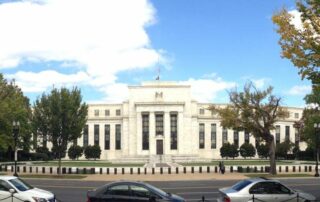
Attorneys suggest Federal Reserve ‘actively embrace and utilize’ Blockchain technology
A pair of Washington DC attorneys recently penned an open letter suggesting that the U.S. Federal Reserve’s Shared National Credit (SNC) review program should use a blockchain.

The Monetary Authority of Singapore: keeping up with the Bank of England
My article yesterday was about the flagship lead taken by the Bank of England, supporting innovation and creating refreshed central bank digital structures. They are experimenting with everything from a Britcoin to a FinTech Accelerator program, and these operations have filtered through the system into RegTech programs from Project Innovate to the Regulatory Sandbox.

The Bank of England: taking the lead in #FinTech
I like to point at the fact that the Bank of England is taking a leadership role in FinTech, but it goes wider and deeper than this. Bear in mind, the regulator – the Prudential Regulatory Authority (PRA) – lies under the Bank’s control. Before the Global Financial Crisis, it was independent and part of the Financial Services Authority (FSA). This does not mean it' under government control – like the US Federal Reserve, the Bank of England is a private company – but they do co-ordinate closely with Her Majesty’s Treasury (HMT) department within UK Government, especially as HMT control the Financial Conduct Authority (FCA).

Decreasing relevance has consumers straying to bank alternatives, states Earnst & Young
British multinational professional services firm, Ernst & Young (EY), recently published its Bank Relevance Index (BRI). The data shows how banks’ "decreasing relevance has consumers straying to bank alternatives."

Banks abandon the Caribbean, local bitcoin exchange experiences 33% increase in users every month since February
Smaller, poorer countries are being abandoned by big banks in an exodus commonly referred to as “de-risking” or “de-banking.” In the Caribbean, where many small countries with poorer populations reside close to each other, the problem is getting so bad that local businesses regularly have a hard time receiving remittances and paying suppliers outside of their own country, even when their trading partner is just the next island over.

Machines that learn will decimate human jobs … or will they?
I was having a debate yesterday where a bank executive was asking me about what the hottest things in FinTech are right now. My answer was machine learning (AI) and blockchain. There are others such as contextual commerce, voice recognition and digital assistants, but machine learning and blockchain are top of mind.

JPMorgan Chase urges asset managers to adopt blockchain
JPMorgan Chase & Co, and an international management consulting firm, Oliver Wyman, recently released a guide encouraging blockchain technology adoption amongst asset managers: “The report is designed to serve as a guide to how the technology may evolve, the impact it may have on asset managers and the action they can take.”


