


China’s bitcoin ban intensifies as WeChat prohibits crypto trading
China’s most popular social media application, WeChat, will enforce a ban on crypto asset trading and fundraising activities at the end of this month. The move is in line with the Chinese government’s ‘war on crypto,’ which has already seen ICOs and local bitcoin exchanges effectively banned.
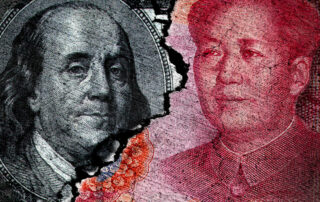
How digital currencies will shape the future of geopolitics
The US dollar's global reserve status is becoming precarious as competing superpowers China, Russia and Europe seek alternatives to the SWIFT system and trade settlement. China has harnessed blockchain and is close to a digital national currency that will integrate with national surveillance - could this be the largest market for privacy coins?
China is a threat to the Bitcoin network says new report
A new study published by researchers from Princeton and Miami International University suggests that China poses a potential threat to the Bitcoin network as the majority of bitcoin mining operations are located in a country whose government holds an adversarial view of the number one cryptocurrency.

China ICO ban proving ineffective
Despite measures announced in February aimed at preventing its citizens from taking part in cryptocurrency trading and initial coin offerings, Chinese media are admitting that ICO activity is continuing to intensify
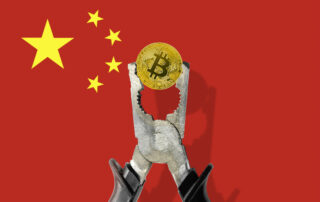
China’s waning influence on the global Bitcoin economy
In early 2017 China was the biggest and most influential market for bitcoin worldwide, as the bulk of both mining and trading was conducted in the People's Republic. Since then, much has changed as global bitcoin adoption and changes in regulations - both in China and in neighboring jurisdictions - have led to a shift in China’s influence on the bitcoin ecosystem.
Global And Chinese Digital Currency Industry,2018 Market Research Report
The 'Global and Chinese Digital Currency Industry, 2013-2023 Market Research Report' is a professional and in-depth study on the current state of the global Digital Currency industry with a focus on the Chinese market. The report provides key statistics on the market status of the Digital Currency manufacturers and is a valuable source of guidance and direction for companies and individuals interested in the industry. Firstly, the report provides a basic overview of the industry including its definition, applications and manufacturing technology. Then, the report explores the international and Chinese major industry players in detail. In this part, the report presents the company profile, product specifications, capacity, production value, and 2013-2018 market shares for each company. Through the statistical analysis, the report depicts the global and Chinese total market of Digital Currency industry including capacity, production, production value, cost/profit, supply/demand and Chinese import/export. The total market is further divided by company, by country, and by application/type for the competitive landscape analysis.
China’s exchange ban starts closing services
September has been a wild ride for Bitcoin, echoing January 2017 as a month dominated by news driven by the Chinese government. The current round of announcements began on the Sept 4, when the government made the sale and trading of ICO tokens illegal across China. Many of these digital assets were traded on bitcoin exchanges.
China cracks down on cryptocurrency ICOs, while regulators across the globe issue warnings
The People’s Bank of China (PBoC), and six other government departments and ministries related to the Chinese economy, recently announced that Initial Coin Offerings (ICOs) are now illegal in the country. Referring to them as “illegal financial crimes,” the country’s central bank blames ICOs for “disrupting the financial markets” and calls for their immediate ification.

Have we just seen the end of fake Chinese bitcoin trading volumes?
Four Chinese bitcoin exchanges, including the three top exchanges in the world by volume, have each announced that they will start charging 0.2 percent fees on all trades, starting Tuesday the 24th.

KPMG outlines blockchain technology impacts and countermeasures for banks in China
Big Four accounting firm KPMG recently published its third quarterly report on China’s banking sector. Among a variety of topics is the implications and countermeasures for commercial banks, “under the rise of blockchain technology.”
Chinas banking sector: Performance of listed banks and hot topics
This issue focuses on big data used to promote the transformation of banking outlets; how to build a data mart for banking credit risk from the basics; the interpretation of the implications of Circular No.42 on banking business; the discussion and analysis of the accounting treatment of the business of investment-loan linkage of banks; and the implications of blockchain technology on commercial banks and proposed countermeasures. These topics are receiving more and more attention in the banking industry, and we hope that our discussion will help our readers gain a firmer understanding. Furthermore, this issue provides an overview of the financial position and performance of listed banks in the third quarter of 2016, which will allow readers to better understand the overall performance of the sector.

Chinese dominance in the blockchain space now includes startup investments
According to big-four professional services firm KPMG, China’s dominance in the blockchain space has now spread to startups and startup funding, displacing Silicon Valley.

The oldest bitcoin exchange, BTCC, moves into the US market
The longest-running bitcoin exchange still in service, Bitcoin China, recently opened a new US Dollar denominated platform for spot and margin trading. The new real-time exchange, currently in beta, offers Market, Limit, Stop, and One Cancels the Other (OCO) orders for spot trading. The Pro trading platform, also in beta, adds 25x margin trading.

Walmart, IBM and Tsinghua University to use a blockchain for food supply chain tracking in China
Retail giant Walmart, IBM and Tsinghua University are collaborating to improve the way food is tracked, transported and sold across China, using blockchain technology. The project creates, “A new model for food traceability, supply chain transparency and auditability using IBM Blockchain based on the open source Linux Foundation Hyperledger Project fabric,” and coincides with the opening of a new Walmart Food Safety Collaboration Center in Beijing.
China’s Blockchain Technology and Application Development
This report suggests that we can learn from the advanced practices of developed countries and regions, combining the development of China's blockchain technology and applications, and timely introduce blockchain technology and industrial development support policies, focusing on key technologies, major demonstration projects, and "double". Create platform construction, system solution research and development and public service platform construction.

IBM and UnionPay collaborate on blockchain project for exchanging bank loyalty points
IBM China Research Lab and China UnionPay’s E-payment Research Institute recently demonstrated a collaborative blockchain project at the Shanghai International Blockchain Week. The project enables banks to integrate and share bonus point systems, while consumers will be able to exchange points from any of the banks they do business with.


