


In brief: Decentralized oversight
Following the publication of Outlawing bitcoin is a matter of control, we received some interesting comments, “So a decentralized currency requires ... centralization?” This comment arose from a statement in the article that read: “A decentralized digital currency requires regulation and oversight."
In brief: Bitcoin’s battlefronts
Trying to decide if Bitcoin is a currency or an investment is not unlike trying to discern whether light is a particle or a wave. The correct answer of course is, it’s both. Bitcoin faces a multitude of battlefronts that may obstruct it from further pushing into the mainstream, as a universally accepted currency.
In brief: Outlawing bitcoin is a matter of control
On Wednesday, Russia’s ministry of finance continued with its pursuit to outlaw the world’s top cryptocurrency, Bitcoin (BTC). The new draft, banning the production and circulation of BTC, comes attached with punitive damages that could range from million ruble fines, up to seven years in jail, and the closure of business operations.

Japanese push to regulate exchanges and recognize bitcoins as asset-like money
Japan’s executive branch of government, known as the Cabinet, has approved a set of bills aimed at modernizing the Japanese payments industry and giving recognition to virtual currencies like bitcoin for having a “function similar to real money.”
Tech Trends 2016 – Innovating in the digital era
The 2016 report identifies eight trends that reflect macro forces fuelling innovation: digital, analytics, cloud, the renaissance of core systems, and the changing role of IT within the enterprise, balanced with the implications of cyber riskâsecurity, compliance, regulatory and compliance, quality, and safety.
Distributed Ledger : The technology behind the virtual currency on the example of the blockchain
In April 2015, the European Securities and Markets Authority ESMA began a consultation that looks inter alia at the perception among market participants of how DLT works and how it can be deployed both within and outside of virtual currencies. The consultation served as a basis for a further analysis of this technology and examined the question of whether regulatory action may be required. This article explains how DLT works, how it can be applied and what effect it may have on the financial market.
Framework for Securities Regulation of Cryptocurrencies
This report presents a framework for securities regulation of cryptocurrenciesâe.g. Bitcoin and derivative projects or âalt-coins.â The framework is based on the Howey test for an investment contract as well as the underlying policy goals of securities regulation. We find that several key variables within the software of a cryptocurrency and the community that runs and maintains that software are indicative of investor or user risk. These variables are explained in depth and mapped to the four prongs of the Howey test in order to create a framework for determining when a cryptocurrency resembles a security and might therefore be regulated as such. We find that larger, more decentralized cryptocurrenciesâe.g. Bitcoinâ pegged cryptocurrenciesâi.e. sidechainsâas well as distributed computing platformsâe.g. Ethereumâdo not easily fit the definition of a security and also do not present the sort of consumer risk best addressed through securities regulation. We do find, however, that some smaller, questionably marketed or designed cryptocurrencies may indeed fit that definition.
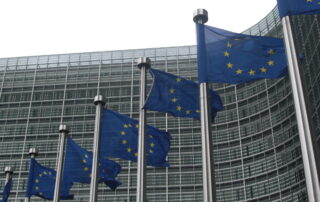
European Commission releases Action Plan, which includes virtual currencies
The European Commission recently released an Action Plan, calling on all member states to adopt the 4th Anti-Money Laundering Directive. Initially proposed last May, the directive is supposed to be in effect by the end of 2016.
Virtual currencies: what are the risks and benefits?
Are virtual currencies an opportunity to transfer money more cheaply or just a way for criminals to trade in illegal goods? The Parliament's economic committee held a hearing in January to discuss the issues involved with experts, who told them EU regulation should not go beyond preventing and fighting crime. Parliament is currently working on a report on virtual currencies, which the economic committee is expected to vote on in April.

IMF describes ‘Virtual Currency schemes,’ including Bitcoin, to the World Economic Forum
Christine Lagarde recently presented “[Virtual Currencies and Beyond: Initial Considerations](http://www.imf.org/external/pubs/ft/sdn/2016/sdn1603.pdf),” at the World Economic Forum in Davos, Switzerland.
Virtual Currencies and Beyond: Initial Considerations
This paper discusses the potential benefits and risks posed by VCs and how financial regulators could approach them. The paper begins by explaining what VCs are, and how they work. It then examines key features and related developments in distributed ledger technologies underlying decentralized VCs, along with their potential use for financial development and financial inclusion. The paper subsequently discusses the policy and regulatory implications of VCs generally and concludes with a brief discussion of areas for future analysis.

British Prime Minister and Cabinet advised to start using distributed ledger technology
An [88-page report](https://www.gov.uk/government/publications/distributed-ledger-technology-blackett-review) was released by the UK Government's Science Office on Tuesday, setting out the findings of a review exploring distributed ledger technology .
Regulatory Treatment of Virtual Currencies under the Tennessee Money Transmitter Act
Virtual currencies, including cryptocurrencies like Bitcoin, have raised questions in relation to money transmission and currency exchange. This memorandum outlines the policy of the Tennessee Department of Financial Institutions with regard to virtual currencies. It expresses the Department's interpretation of the Tennessee Money Transmitter Act, and the application of its interpretation to various activities involving virtual currencies. This memorandum also seeks to establish the regulatory treatment of virtual currencies under existing statutory definitions.

North Carolina ripe for Bitcoin startups
Not only has North Carolina recently led all other states at economic development targeting startups, even their new money transmitter rules have been overhauled to attract bitcoin business, exempting certain bitcoin exchanges and administrators.

IMF ‘unable’ to supply the currency needed to counter speculative attack using bitcoin
According to IMF chief Christine Lagarde, the IMF does not see bitcoin as a threat. However, as bitcoin liquidity continues growing, speculative attacks using the digital currency become more likely.
Smart contracts: The ultimate automation of trust?
The materialisation of contracts capable of enforcing themselves is now facilitated by blockchain technologies. The ability of smart contracts to alter the way in which many traditional processes are performed is potentially immense. However, standardisation and wider adoption of the blockchain is needed to turn this potential into reality.


