

Germany’s Opposition Party Wants Bitcoin as National Reserve Asset


Germany's second-largest political party just made a bold move that could change how Europe thinks about Bitcoin.
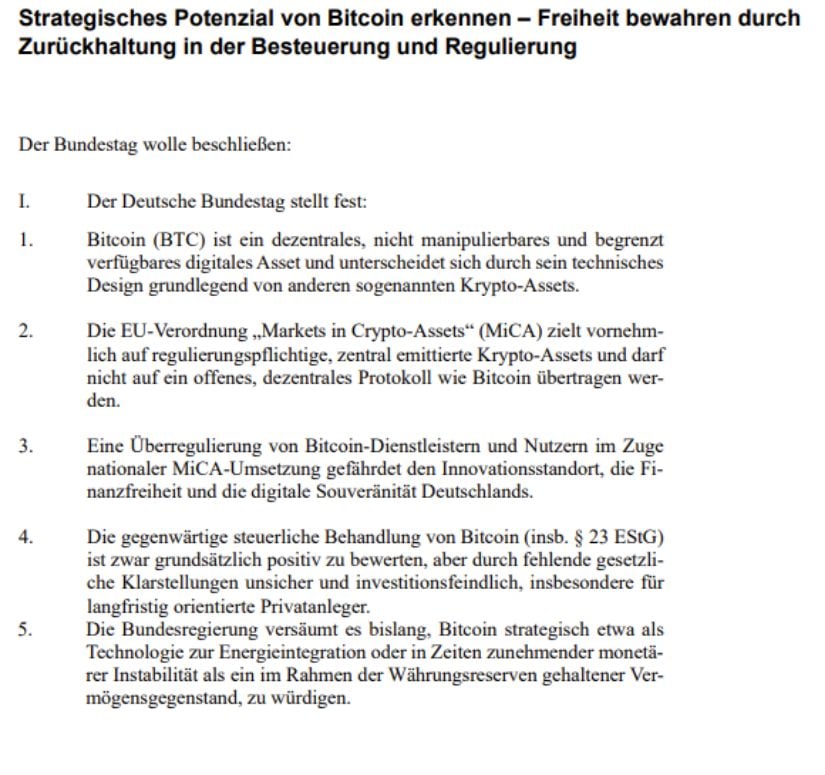
The Alternative for Germany (AfD) submitted an official motion to parliament asking the government to treat Bitcoin differently from other cryptocurrencies and consider holding it as a strategic reserve asset.
This proposal comes with painful irony. In July 2024, Germany sold 50,000 Bitcoin for approximately $3 billion. Today, those same coins would be worth more than $6.5 billion—a missed opportunity of over $3 billion.
What the AfD Wants
The AfD filed their motion with the Bundestag on October 24, 2025. The party argues that Bitcoin is fundamentally different from other digital assets and shouldn’t fall under Europe’s new crypto regulations called Markets in Crypto-Assets (MiCA).
“Overregulation of Bitcoin service providers and users in the course of national MiCA implementation jeopardizes Germany’s innovative capacity, financial freedom, and digital sovereignty,” the motion states.
The proposal suggests Germany should acquire roughly 2% of Bitcoin’s total supply as a national reserve. This would mirror similar efforts in France, where lawmakers recently proposed acquiring 420,000 Bitcoin over seven to eight years.
Source: dserver.bundestag.de
The AfD also wants to keep Germany’s current tax benefits for Bitcoin holders. Right now, Germans who hold Bitcoin for at least 12 months don’t pay taxes on gains. The party wants to maintain this rule, keep Bitcoin exempt from value-added tax, and protect people’s right to store their own Bitcoin.
Germany’s Costly Mistake
Understanding why this motion matters requires looking at Germany’s recent history with Bitcoin. In July 2024, German authorities sold nearly 50,000 Bitcoin seized from an illegal movie piracy website called movie2k.
The government sold these coins at an average price of around $54,000 to $58,000 per coin. The total sale brought in approximately $2.9 billion.
But Bitcoin’s price has since more than doubled. At today’s price of approximately $113,000, those same 50,000 Bitcoin would be worth $6.5 billion. Germany essentially left over $3.5 billion on the table by selling too early.
The sale also crashed Bitcoin’s price at the time, dropping it from $70,000 to $56,000. Many in the crypto community criticized the decision as short-sighted, especially since countries like El Salvador and Bhutan were actively accumulating Bitcoin as a strategic asset.
Europe Joins the Bitcoin Reserve Trend
Germany isn’t alone in reconsidering Bitcoin’s role in national finances. Just days before the AfD motion, French lawmaker Éric Ciotti introduced similar legislation. His proposal suggests France should acquire 420,000 Bitcoin using surplus energy from nuclear and hydroelectric power plants, seized cryptocurrency from criminal cases, and daily purchases from national savings funds.
Switzerland is also in the conversation. Parliamentarian Samuel Kullmann has been working to add Bitcoin to Switzerland’s constitution and the central bank’s balance sheet.
This movement reflects a global trend. The United States established a Strategic Bitcoin Reserve in March 2025 through executive order, consolidating about 198,000 Bitcoin seized from criminal investigations. Sixteen U.S. states have introduced their own Bitcoin reserve legislation.
Even major banks are changing their tune. Deutsche Bank released a report predicting Bitcoin could appear on central bank balance sheets by 2030, working alongside gold as a backup asset.
Real Challenges Ahead
Despite the momentum, this proposal faces serious obstacles. The AfD is an opposition party, and Germany’s governing coalition is unlikely to hand them a political victory. The motion will go through committee review before reaching a full parliamentary vote.
Technical challenges are also significant. Storing a national Bitcoin reserve requires secure custody solutions with multiple key holders, independent auditors, and clear accounting rules. The government would need to address questions about insurance, valuation methods, and how Bitcoin holdings fit with monetary policy.
Critics argue the proposal lacks operational details. How would Germany buy the Bitcoin? Who would manage it? How would volatility affect public finances? These questions need answers before any serious implementation could begin.
Federal Reserve Chair Jerome Powell represents the skeptical view held by many traditional finance leaders. He has stated clearly that the Federal Reserve cannot and will not hold Bitcoin because “the Federal Reserve Act specifies what we can own, and Bitcoin is not part of that list.”
Germany’s Growing Bitcoin Economy
While the government debates policy, Germany’s private sector is moving forward. Hamburg-based company Aifinyo AG became Germany’s first Bitcoin treasury firm, investing €3 million in Bitcoin with plans to hold 10,000 Bitcoin by 2027.
The company’s head of Bitcoin strategy, Garry Krugljakow, predicts that “within five years at most, every DAX company will have to consider whether they need Bitcoin on their balance sheet—as inflation protection and strategic reserve.”
Germany currently ranks as the third-largest country in Europe by total crypto value received, according to blockchain analytics firm Chainalysis. The country has also issued more MiCA licenses than any other EU member, showing it’s relatively crypto-friendly despite the 2024 Bitcoin sale.
The Bottom Line
The AfD’s motion probably won’t become law anytime soon. Political opposition, technical complexity, and regulatory hurdles make quick adoption unlikely. But the conversation itself signals something important: Bitcoin is no longer dismissed as internet money by European politicians. It’s now part of serious discussions about monetary independence, inflation protection, and financial sovereignty.
Whether Germany eventually builds a Bitcoin reserve or not, the debate has begun. And with Bitcoin trading above $110,000 and multiple countries exploring similar strategies, that multi-billion dollar mistake from 2024 serves as a powerful reminder of what happens when governments treat Bitcoin as just another asset to liquidate rather than a potential strategic reserve.
 Brave New Coin reaches 1M+ engaged crypto enthusiasts a month through our website, podcast, newsletters, and YouTube. Get your brand in front of key decision-makers and early adopters in 2026. Limited slots remaining! Find out more today!


