


Regulating the cryptocurrency markets
How do you regulate something that is completely decentralised and has no office? I struggle to find an answer for this. I know that when my exchange is hacked or my hard wallet is lost, I am frustrated and have no authority to report it to or bail me out. What is the answer?

In like a Lion… CAT claws its way to compliance
Late on Tuesday, November 14th, Wall Street history was made when the SEC declined requests from exchanges to delay the implementation of Rule 613 — or the CAT (Consolidated Audit Trail). Originally, the 20 Self-Regulatory Organizations (or SROs) were supposed to go live on November 15, 2017. These would then be followed by large Broker-Dealers in 2018, and smaller B/Ds the next year. Exchanges were required to begin feeding trading data into CAT by November 15th, but many are not completely ready to comply. Word on the Street is that many players are waiting and watching to see if the SEC will come through with a compromise to push back the date for compliance.

ICOs and cryptocurrencies – a ‘rough’ guide to global regulation
Cryptocurrency mania, especially new ICOs, has led to an internationally inconsistent regulatory response. Some authorities have issued total bans on ICOs, whilst others have decided to take a more observational approach to regulating the burgeoning industry. Notably, a number of regulators, have issued warnings to consumers about the lack of investor protection, high risk of fraud, and price volatility which can characterise ICOs and cryptocurrencies in general. This article seeks to provide a brief overview of the approaches taken by a number of regulators and provide readers with an idea of the current regulatory status of cryptocurrencies and ICOs in a number of key FinTech jurisdictions.

When will Bitcoin ETFs get approval?
When will Bitcoin exchange traded funds (ETFs) be approved? In March this year the Winklevoss Twins Bitcoin ETF application was rejected by the Securities and Exchange Commission (SEC). Then both investment management firm VanEck and ETF specialists Rex Shares withdrew filings with the SEC to launch ETFs. The SEC has argued that these firms can not file a Bitcoin ETF until the underlying futures contracts are already in place.

SEC announces ‘Cyber Unit’ to investigate ICOs and DLT
The Securities and Exchange Commission (SEC) has announced a new initiative that it says will address “cyber-based threats and protect retail investors”. Branding its new division the Cyber Unit, the SEC says it will focus on offenses related to misconduct using the dark web and violations involving distributed ledger technology and initial coin offerings
Vendor Landscape: Blockchain Technology Providers In Asia Pacific
While blockchain technology is still in its early stages, its synergistic use of multiple technology building blocks opens doors to new business models and opportunities. To leverage blockchain for digital innovation in Asia Pacific (AP), CIOs and enterprise architecture (EA) professionals must have a holistic view of the blockchain ecosystem in the region. This report presents the landscape of blockchain vendors, their early success in various countries, and the regulatory environments and major alliances in each region.
SEC looks into token sales; ICOs subject to US security laws
The U.S. Securities and Exchange Commission (SEC) recently issued a report of its investigation on The DAO. The record-setting Initial Coin Offering (ICO) launched in June 2016, and quickly lost a third of its assets to a hacker. The purpose given for the report is "to stress that the U.S. federal securities law may apply to various activities, including distributed ledger technology.” The report cautions market participants that offer and sell digital assets, including through ICOs and ‘Token Sales’ are subject to the requirements of the federal securities law.

Initial Coin Offerings: What happens when a bubble cannot expand?
Initial Coin Offerings, or ICOs, have taken the fintech world by storm in the past few months. Despite the fact that these tokens do not usually confer any rights or claims against assets, as in the case of debt or equity securities, there are likely two reasons for the surge in ICO subscriptions. But the complete lack of investor protections and dubious quality of ICO issuers has drawn the attention of the SEC.
Fintech and Financial Services: Initial Considerations
A new wave of technological innovations, often called âfintech, â is accelerating change in the financial sector. What impact might fintech have on financial services, and how should regulation respond? This paper sets out an economic framework for thinking through the channels by which fintech might provide solutions that respond to consumer needs for trust, security, privacy, and better services, change the competitive landscape, and affect regulation. It combines a broad discussion of trends across financial services with a focus on cross-border payments and especially the impact of distributed ledger technology. Overall, the paper finds that boundaries among different types of service providers are blurring; barriers to entry are changing; and improvements in cross-border payments are likely. It argues that regulatory authorities need to balance carefully efficiency and stability trade-offs in the face of rapid changes, and ensure that trust is maintained in an evolving financial system. It also highlights the importance of international cooperation.
US States working on blockchain legislation in 2017
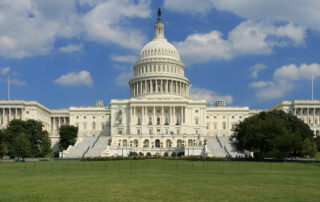
At least eight US States have worked on bills accepting or promoting the use of Bitcoin and Blockchain technology this year, and a couple of them have already passed them into law. The bills cover a wide range of purposes, from increasing transparency in State operations to protecting consumers from added taxation. Some have been very specific, defining blockchains and smart contracts, while describing the tecnology as “immutable” and providing “uncensored truth.”
Cryptotechnologies in international payments: Information Paper
The EBA analysis explores the opportunities that distributed ledger technology holds for payment service providers in terms of lowering operating costs, modernising the international payments value chain and maintaining compliance with key regulatory requirements in markets around the world. The paper further covers specific use cases, such as distributed KYC registries and low-value P2P/B2C payments. The EBAâs Cryptotechnologies Working Group will continue to work on the topic of international payments: an evaluation of implementation scenarios in international payments and the exploration of security issues in the use of cryptotechnologies are next on the agenda of the group.

Bitcoin regulation overhaul in Japan
Japan’s Government has long been working on a bill to amend its Banking Act, accounting for changes to the economy stemming from the growth of telecommunications technologies. Last week, the Japanese Financial Services Agency (FSA) announced that this bill will come into full force on Saturday, April 1. The amendments include an ordinance concerning digital currencies as well as digital currency exchanges.

New AML compliant bitcoin processing service available to 56,000 merchants
ACI Worldwide recently announced a partnership with Payment21. ACI Vice President Andy McDonald said that the partnership will enable their clients to offer bitcoin payments, “without exposing their merchants to price volatility.”
EU Parliament states Virtual Currencies cannot be anonymous
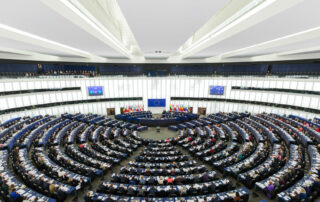
The European Parliament recently published a report detailing amendments to the Directive on the prevention of the use of the financial system for the purposes of money laundering or terrorist financing. "Virtual currencies are a marginal phenomenon at present,” the Parliament states, “it is possible that they will become increasingly important."
Bitcoin quickly rebounds after SEC decision
The U.S. Securities and Exchange Commission (SEC) made history on Friday by disapproving the Bats BZX Exchange filing to list and trade shares of the Winklevoss Bitcoin Trust. The shares, representing 0.01 BTC, would have tracked the price of bitcoins on the Gemini Exchange. The digital-asset exchange is owned and operated by the Gemini Trust Company, which would have owned the equivalent share value in bitcoins.

New Hampshire House reverses stance on cryptocurrency money transmitter status
New Hampshire is home to the largest community of freedom advocates in the US, and possibly the largest Bitcoin-using community as well. The New Hampshire State House of Representatives recently passed an important bill for local Bitcoin businesses. The legislation unwinds a bill created two years prior, an ominous-sounding Bill, HB 666, which defined bitcoin and cryptocurrency-using businesses as money transmitter services.


