Anthropic’s Claude AI Blocks Pokémon Fan Games Over Copyright Concerns—What Changed?
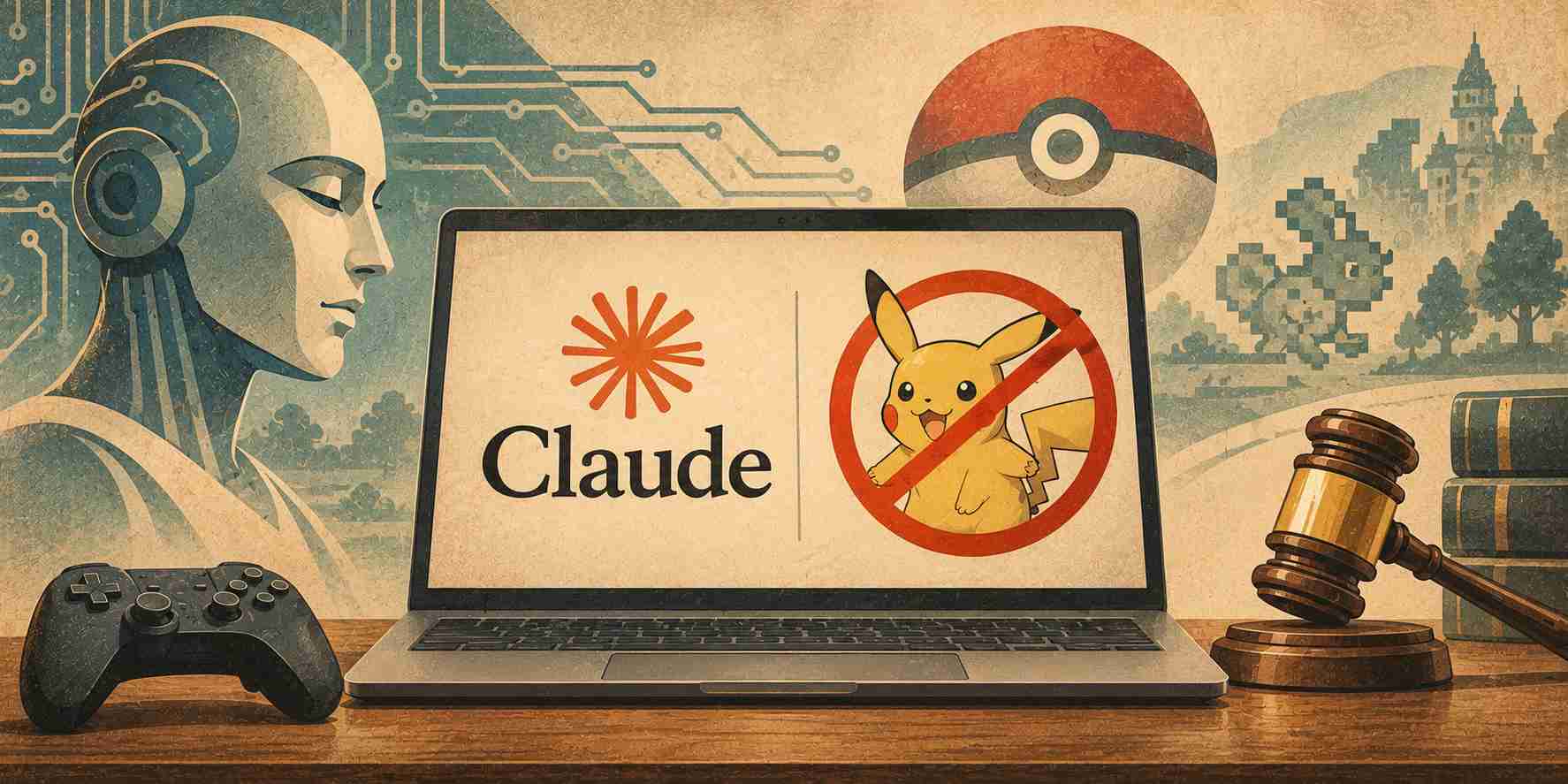
Anthropic’s Claude AI has begun rejecting requests to create Pokémon-related game assets, raising new questions for fan developers using generative tools to build unofficial projects.
The reported restrictions extend beyond recreating existing games. Claude has also refused requests involving recognizable Pokémon characters, sprites, artwork, and other franchise elements, affecting developers who have incorporated AI into their creative workflows.
Claude Won’t Generate Your Pokémon Slop For You Anymore
The restrictions came to wider attention after Big Kid Nation, the developer behind the unofficial game Pokémon Arena 2D, reported that Claude had started rejecting requests connected to its Pokémon fan project. The developer shared the issue on November 11, 2026, and subsequently showed examples of the AI refusing to work with Pokémon-related assets.
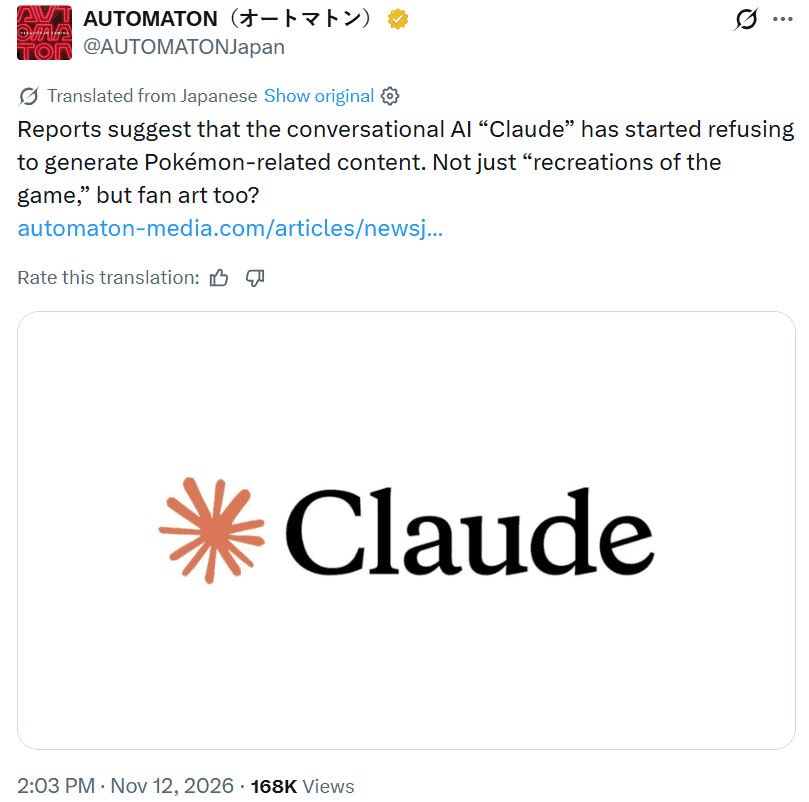
Reports indicate that Claude AI is refusing to generate Pokémon-related content, including fan art and game recreations. Source: AUTOMATON/X
In one reported exchange, Claude declined to use existing Pokémon sprites when helping build a new game. The refusal remained in place even after the developer asked whether moving the files to a different location would change the outcome. This suggests that the restriction is concerned with the content itself rather than simply where the assets are stored.
An examination of Claude’s coding instructions also revealed more specific restrictions covering intellectual property owned by existing game franchises. These include character names, character designs, artwork, music, stages, levels, and recognizable visual appearances.
The reported changes could affect developers who previously used AI tools to generate game code, modify sprites, create artwork, or assemble other elements for unofficial projects. Instead of receiving assistance with those tasks, users may now encounter refusals when their requests involve recognizable copyrighted material.
Big Kid Nation has expressed frustration with the development, particularly because of the time and financial resources invested in Pokémon Arena 2D. The developer described the project as a non-monetized effort, stating that substantial personal expenses had gone toward AI services and development.
The creator has also pushed back against criticism that the project relies entirely on automated production. In comments shared through the project’s Discord community, Big Kid Nation described its workflow as “almost exclusively vibe coded,” while acknowledging that a growing human team is involved.
The developer has reportedly spent up to $2,000 per month on project expenses and dedicated 10 to 14 hours daily to learning and development during much of the year. Big Kid Nation has also appealed to Nintendo to create the ambitious official Pokémon game that fans have been requesting, expressing a willingness to contribute to such an effort without payment.
Despite the new restrictions, the developer has not announced that Pokémon Arena 2D is being abandoned.
This Is Likely An Extension Of Claude’s Recent Video Game Update
The Pokémon-related refusals appear to follow a broader change Anthropic introduced to Claude Code in late October 2026. The earlier update focused on preventing the AI from helping users recreate specific existing video games, including projects presented under different names or described as original.
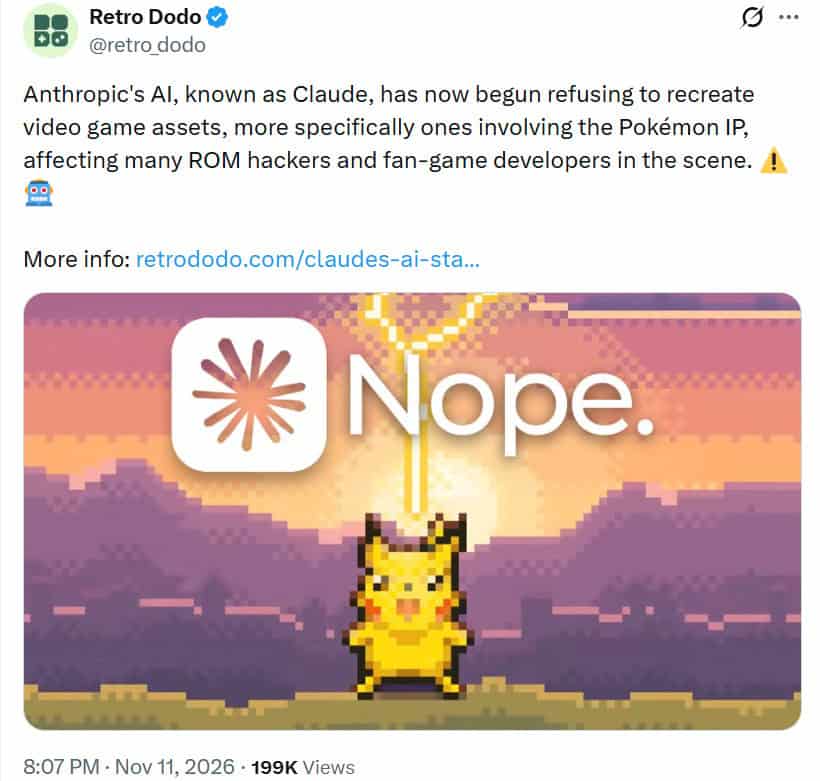
Anthropic’s Claude AI has begun blocking Pokémon-related content generation, including ROM hack assets, fan-game characters, sprites, and game recreations, citing intellectual property restrictions. Source: Retro Dodo/X
The revised instructions established a distinction between developing original games and reproducing another company’s existing intellectual property. Claude was directed to assist with original concepts, games built around general genres, and projects using designs and assets created by the user.
However, it was instructed not to build a recreation of a specific existing game, even when users attempted to rename the project or describe it as an original creation.
Anthropic technical staff member Addy Osmani acknowledged the change in a public post, explaining that the company wanted to steer Claude away from recreating another developer’s game. Osmani also stated that “using Claude to infringe IP is against our usage policy.”
The original restriction was not intended to prevent all AI-assisted game development. Instead, it addressed requests that could involve copying existing titles and their protected elements. Anthropic indicated that original game concepts and projects based on users’ own designs and assets would remain supported.
The subsequent Pokémon-related refusals suggest that the safeguards have become more specific. In addition to preventing direct game recreations, the reported instructions now identify individual elements that could constitute copying, including characters, artwork, names, music, and level designs.
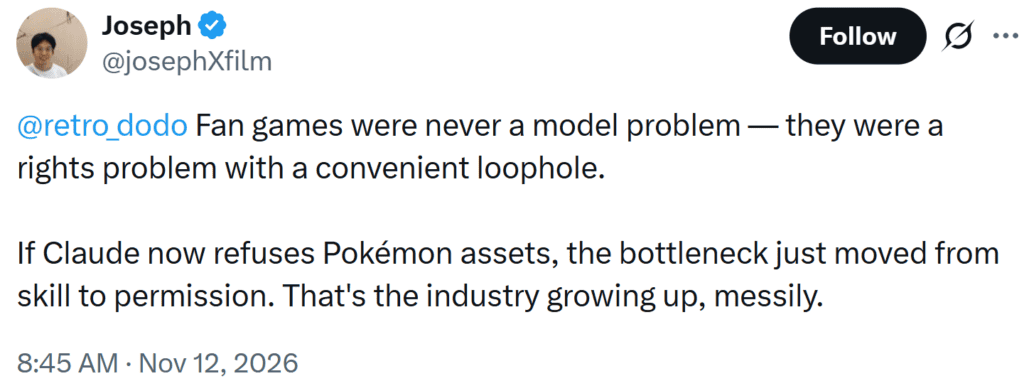
The move highlights how Pokémon fan-game development has long faced copyright restrictions, with AI now closing a technical workaround that enabled unauthorized recreations. Source: Joseph/X
This distinction is important for fan developers. A project may introduce original gameplay mechanics or a different battle system while still relying on recognizable characters, logos, sprites, and other material from an established franchise. Changing the gameplay format does not automatically resolve intellectual-property concerns associated with those assets.
The developer behind Pokémon Arena 2D describes the project as a real-time arena battler in which players select moves for their creatures during battles. Its visual presentation uses a community-made Pokémon sprite collection, making the relationship between the game’s original mechanics and its use of established franchise assets particularly relevant to Claude’s restrictions.
Final Thoughts
For now, Pokémon Arena 2D remains scheduled for a December 2026 public beta, according to Big Kid Nation’s official website. The project is advertised as a free fan game, with players able to sign up for updates ahead of its public release.
Whether the development team can maintain that schedule while adjusting to Claude’s restrictions remains uncertain. The reported refusals may require changes to its AI-assisted workflow, particularly for tasks involving protected characters and artwork.
The development also highlights a broader challenge for generative AI companies. Tools that make coding, illustration, and game production more accessible must distinguish between helping users create original entertainment and reproducing material owned by established franchises. Anthropic’s latest restrictions show how those boundaries are increasingly being enforced within AI-assisted creative work.
 Brave New Coin reaches 1M+ engaged crypto enthusiasts a month through our website, podcast, newsletters, and YouTube. Get your brand in front of key decision-makers and early adopters in 2026. Limited slots remaining! Find out more today!