


Book Review: “The New Intersection of Money – Where TradFi and DeFi Converge”
The New Intersection of Money: Where TradFi and DeFi Converge arrives at exactly the right moment. As stablecoins, tokenised assets and blockchain-based payment rails move steadily into mainstream finance, the book offers a clear and accessible guide to how banks, regulators and DeFi builders are beginning to meet. It is a timely, thoughtful read — though its focus on stablecoins and TradFi adoption leaves room for a bigger argument: that on-chain finance is not just better banking plumbing, but a deeper rethink of ownership, access and value.

The Real Appeal of Stablecoins in 2026: Reach, Not Just Stability
The stablecoin market just crossed $321 billion and now settles more value annually than Visa and Mastercard combined. Stability was the first step, now stablecoins have reach.

Coins.ph – Building the Stablecoin Economy
Wei Zhou is the CEO of Coins.ph, the largest crypto-native fintech platform in the Philippines, which he acquired in 2022. A former CFO of Binance and long-time finance executive — Wei has been rebuilding Coins.ph as a fully regulated on-ramp between fiat, crypto and stablecoins for Filipino users and businesses, while extending the playbook globally through Coins.xyz.

Oracle-Anchored BRL Liquidity in Practice
Much of the most important work in decentralised finance happens quietly. Rather than pursuing rapid growth through incentives, emissions, or headline volume, Stabull’s focus throughout 2025 was on building execution infrastructure capable of handling real market behaviour: professional routing, economically rational participants, and capital that moves only when conditions genuinely warrant it. BRZ liquidity on Stabull provides a clear example of that approach in practice.

Oracle-Anchored FX Liquidity in Practice
Much of the work undertaken at Stabull throughout 2025 was intentionally quiet. Rather than pursuing rapid growth, emissions-led liquidity, or headline volume metrics, the focus was on building execution infrastructure capable of handling real market behaviour: professional routing, economically rational actors, and capital that moves only when conditions genuinely make sense. As 2026 began, a number of those design decisions started to surface clearly on-chain.

Oracle-Anchored Real-World Assets in Practice
Much of Stabull’s work through 2024 and 2025 was intentionally quiet. Rather than optimising for headline TVL, emissions-led liquidity, or short-lived bursts of incentivised activity, the focus was on building execution infrastructure capable of handling real market behaviour: externally priced assets, economically rational counterparties, and capital that moves only when conditions genuinely warrant it.

Transak – The Crypto On-Ramp
Andy Werner is VP of Partnerships and Strategy at Transak, one of the world’s leading fiat-to-crypto on-ramp providers. Werner shares his journey through fintech — from big banks to startups — and explains how Transak is building the compliance and payments infrastructure that quietly powers hundreds of crypto platforms globally. While the company operates in what he jokingly calls the “boring” side of crypto, Werner argues that boring is exactly what payments infrastructure should be: seamless, reliable, and invisible to the end user.

Stablecoins vs. U.S. Bank Deposits: The Quiet Financial Disruption
Standard Chartered has done something most banks avoid: it put a hard number on a threat the traditional financial system would rather keep abstract. Its latest analysis suggests that as much as $500 billion could move out of U.S. bank deposits and into stablecoins by 2028, driven by the rapid expansion of dollar-pegged digital tokens as payment tools, trading instruments, and increasingly, stores of value.

Cash App Update 2025: New AI Assistant, Stablecoins and Banking Features Explained
Cash App adds AI budgeting, seamless Bitcoin payments, flexible banking perks, teen accounts, and underbanked lending, transforming it into a full financial platform.

Mexico City to Host Latin America’s First Major Stablecoin Conference This August
Mexico City will make history this August as it hosts the region's first large-scale conference dedicated entirely to stablecoins.

The GENIUS Act Winners and Losers: Which Crypto Companies Will Survive?
With Trump signing the GENIUS Act the new law creates a $3.7T stablecoin opportunity, but only for the survivors. Analysis of which crypto companies will thrive vs. die as new regulations wipe out the non-compliant

USDz – the RWA-backed Stablecoin
Ben Shyong is the Co-Founder of Anzen Finance, a digital asset platform that issues USDz, a Real World Asset (RWA) backed stablecoin.
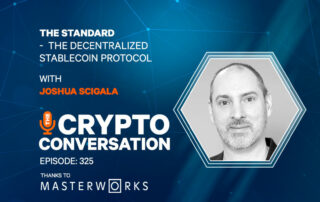
The Standard – The decentralized stablecoin protocol
Joshua Scigala is founder of The Standard - a decentralized stablecoin protocol that enables users to lock up crypto and or physical gold to generate multiple fiat pegged stablecoins.
LUNA Analysis – Why is LUNA the latest token to land on the moon?
LUNA, the native token of the Terra smart contract platform, is one of the best-performing assets in crypto since the beginning of 2021, up a staggering ~10,400%. What’s behind LUNA’s successful mission to the moon?

Wirex and Stellar to create 26 new stablecoins
Payments platform and crypto Visa card provider Wirex partners with the Stellar network to build and launch 26 new stablecoins.
A Note on Cryptocurrency Stabilisation: Seigniorage Shares
Cryptocurrencies like Bitcoin govern the supply of coin through simple and deterministic coin growth rules. As a result,unanticipated changes in coin demand are reflected in changes in coin price,causing volatility and discouraging usage of coin as media-of-exchange. In this paper,the authors argue that next-generation cryptocurrencies should incorporate an elastic supply rule that adjust the quantity of coin supply proportionately to changes in coin market value. There are two difficult problems to solve in order to implement such a scheme. This note outlines a solution to one of those problems,and offers some suggestions on how the other problem might be solved.


