Trump Crypto Firms Face Senate Records Deadline as Democrats Prepare to Take Control
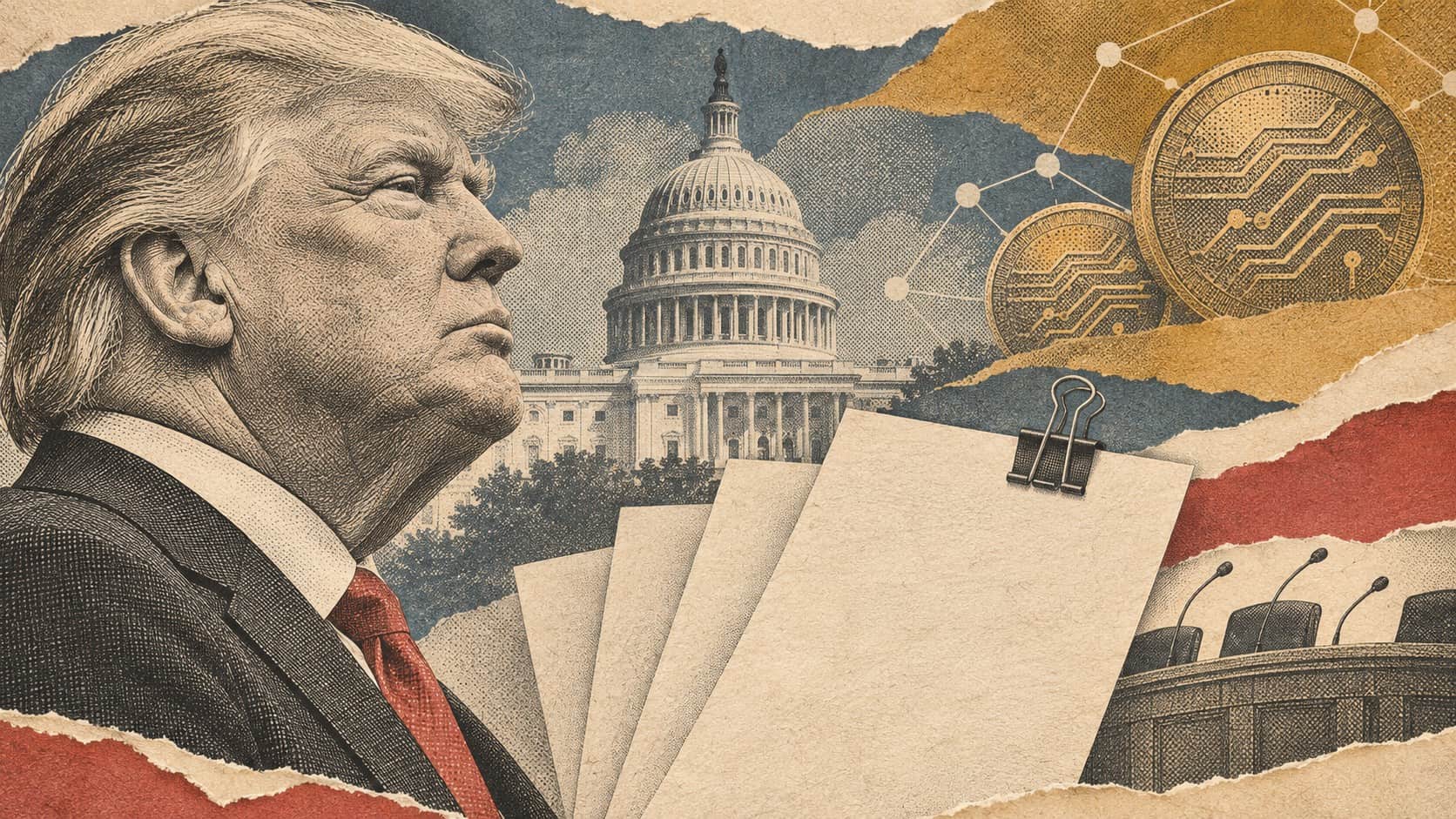
Trump-linked crypto businesses, Binance and Tether face renewed Senate demands for records as Richard Blumenthal prepares to take charge of an investigative panel.
Trump crypto firms are facing a deadline with a different political weight behind it. Senator Richard Blumenthal has renewed demands for records from World Liberty Financial and the company behind the TRUMP memecoin, alongside Binance and Tether, as Democrats prepare to take control of the Senate.
The November 5 announcement sets January 4, 2027, as the final date for voluntary production. The senator’s office identifies him as the incoming chair of the Permanent Subcommittee on Investigations. An inquiry pursued from the minority is moving towards a committee room he expects to run.
That is the pressure point: companies that have disputed the allegations or resisted document demands now face a change in who controls the investigation.
Trump crypto firms face a three-date countdown
Blumenthal’s letter to Fight Fight Fight LLC, addressed to Bill Zanker, asks the company to confirm receipt by November 9 and begin producing records by November 30. Further material is to follow on a schedule agreed with committee staff.
If records are not voluntarily supplied by January 4, the panel would consider “alternative measures to obtain compliance,” he wrote.
The dates turn a long-running dispute into a practical test of cooperation. These are requests for documents, however, rather than findings of wrongdoing. The November letters do not themselves establish that a subpoena has been issued or that any recipient broke the law.
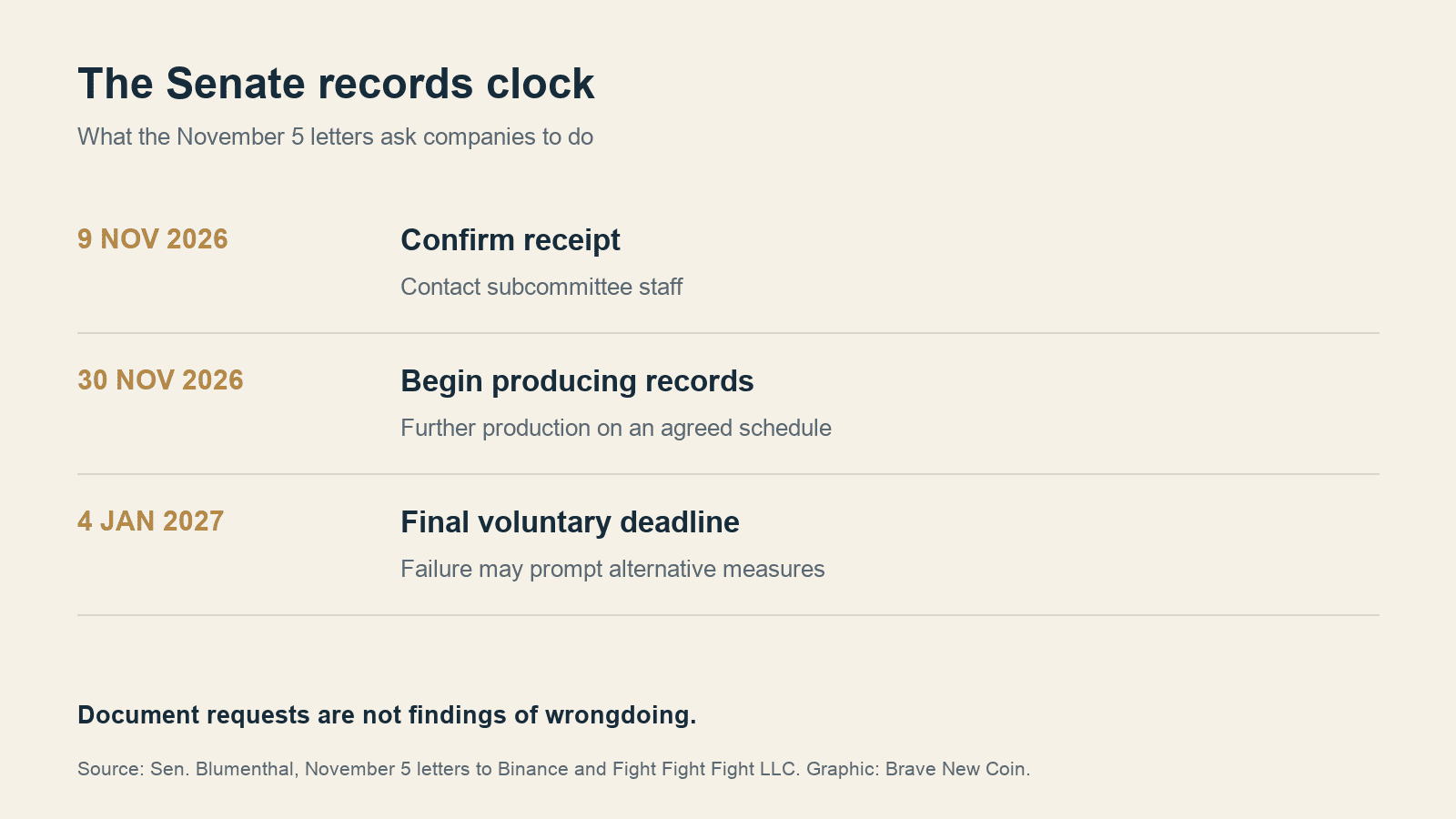
Graphic: Brave New Coin. Dates from the November 5 Senate letter to Binance and the corresponding Fight Fight Fight request. The letters do not constitute findings of wrongdoing.
Behind the memecoin: who owns it, who paid, who benefited?
The Fight Fight Fight packet includes Blumenthal’s original May 2025 request. It seeks ownership and management information, financial relationships with Trump-associated businesses, revenue from the token and policies addressing potential conflicts of interest.
It also asks for records about the dinner promotion for leading TRUMP holders, including registration information, communications and arrangements surrounding a previously advertised White House tour. That makes the inquiry about the business machinery behind the spectacle: how token ownership, payments and access were connected.
There is an obvious human tension in that material. A coin promoted through the president’s name attracted buyers seeking everything from speculative gains to proximity to power. Investigators want records that could distinguish the marketing from the money trail.
World Liberty Financial is a separate recipient of the renewed demands. Blumenthal’s office says the inquiry into the Trump-linked ventures began in May 2025 and concerns possible ethics violations, foreign financial relationships and conflicts of interest.
World Liberty has previously disputed suggestions that its business influenced administration policy. In an April 13 report, the Associated Press said the company denied any connection between a UAE investment and the president’s policy on chip sales. That was a response to earlier conflict-of-interest allegations, rather than the new records demand.
Binance disputes the allegations behind its inquiry
The exchange’s case has its own paper trail. In his November 5 letter to Binance chief executive Richard Teng, Blumenthal renewed February and April requests concerning anti-money-laundering policies and practices. He accused the exchange of failing to provide an adequate response and responsive records.
Binance has offered a sharply different account. Its March 6 response called the reporting behind the earlier inquiry “false, unsupported, and defamatory” and said its investigations of Hexa Whale and Blessed Trust followed law-enforcement enquiries.
The company said it removed both entities from its platform, prohibited users located in Iran and had more than 1,500 compliance specialists. It also denied dismissing staff for raising compliance concerns.
Those are the company’s statements about the earlier allegations, rather than a new answer to the November deadline. The disagreement now includes both the underlying transactions and whether Binance supplied enough evidence to substantiate its account.
Tether received a separate renewed demand. Blumenthal’s office links that inquiry to illicit cryptocurrency use and alleged dealings involving the administration. Those accusations remain the senator’s; a document request is not proof of the conduct alleged.
A new Congress changes the leverage
CoinDesk’s post-election assessment describes an industry adjusting to Democratic control of both chambers after two years of a much friendlier environment in Washington. Committee control matters even when passing legislation remains difficult: oversight can bring executives, correspondence and business arrangements into public view.
The companies involved also occupy different corners of crypto. An exchange, a stablecoin issuer, a finance venture and a presidential memecoin do not share one business model. Their inclusion in the same announcement does not make the accusations against them interchangeable.
For market participants, the immediate question is what documents emerge and what they establish. Political confrontation alone cannot answer that. Nor should a change in committee leadership be presented as an automatic change in cryptocurrency law.
There is also a distinction between providing a public explanation and supplying the underlying material investigators requested. A company can reject an accusation in a statement while a committee continues to seek contracts, communications or transaction records. That gap between competing accounts and supporting documents is where the next phase of this dispute will be fought.
What happens next
The next visible milestones are company responses, the start of production on November 30 and the January deadline. Any announcement of further compulsory action would be a separate development.
The scrutiny also arrives while investors face Bitcoin’s inflation test after the AI stock sell-off. Crypto’s Washington relationships and its exposure to broader financial conditions are being tested at the same time.
Blumenthal has supplied the countdown. Whether it produces meaningful disclosure, another confrontation or both will depend on what the companies actually hand over.
 Brave New Coin reaches 1M+ engaged crypto enthusiasts a month through our website, podcast, newsletters, and YouTube. Get your brand in front of key decision-makers and early adopters in 2026. Limited slots remaining! Find out more today!