Anthropic’s Claude Ship AI Agent Reviews PRs, Fixes Bugs and Approves Code

Anthropic has launched Claude Ship in beta, extending Claude Code beyond code generation into GitHub pull request reviews, automated fixes, and policy-based approvals.
The new workflow combines AI-powered code analysis with agents that address developer feedback, resolve failing checks, and determine whether changes meet a team’s approval requirements.
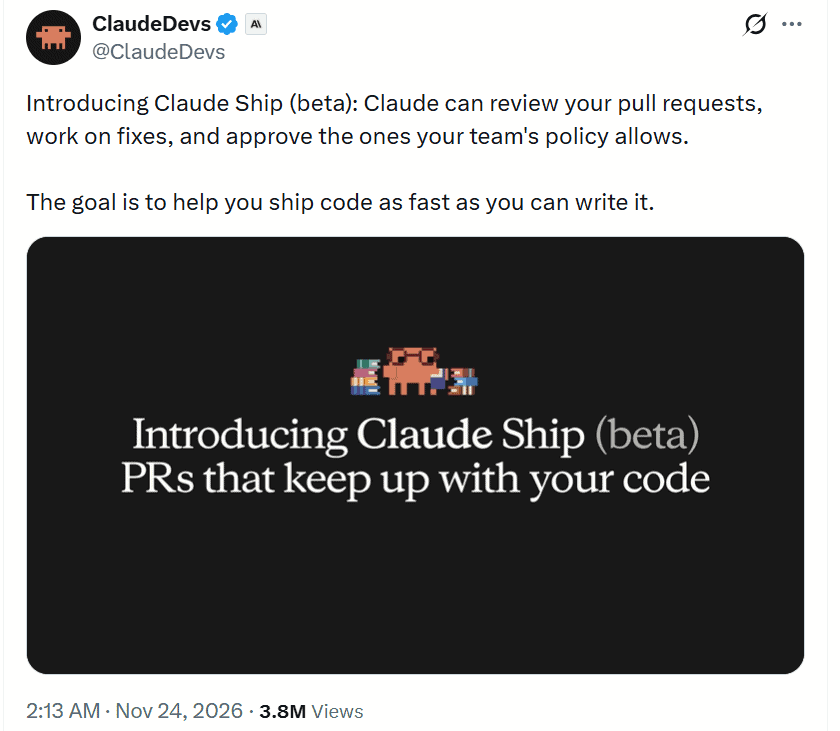
Claude Ship (beta) automates PR reviews, fixes issues, and approves changes under team policies to accelerate code delivery. Source: @ClaudeDevs/X
The release targets a growing bottleneck in software development as AI coding tools generate code faster than engineering teams can manually review and approve it.
How Claude Ship Handles GitHub Pull Requests
Claude Ship brings together three components: Code Review, PR Steward, and Claude Approvals. The system is designed to handle different stages of the pull request (PR) process, from identifying potential bugs to resolving issues and determining which changes are eligible for approval.
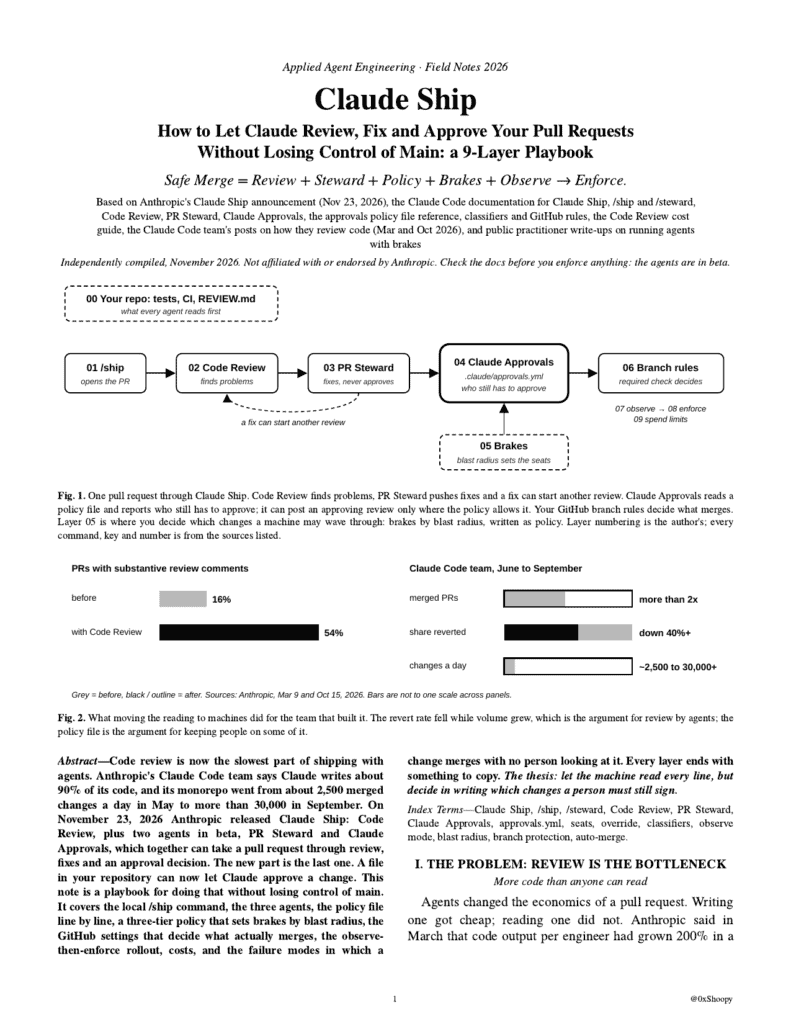
The Claude Ship workflow combines automated fixes, policy-based approvals, risk checks, and gradual enforcement to protect the main branch. Source: @0xShoopy/X
Code Review, which is already generally available, examines proposed changes against the wider codebase. It uses multiple AI agents to identify potential problems, verify findings, and categorize issues before posting them to GitHub. Teams can select Quick, Standard or Deep review levels depending on the complexity of their projects and the level of scrutiny required.
PR Steward takes over when a pull request receives feedback or encounters problems. The agent works in the cloud to address comments from developers, resolve merge conflicts, and fix failing continuous integration (CI) checks. It can also respond to findings from Code Review and other review tools. After each push, PR Steward explains what it changed and provides instructions for reversing those changes if necessary.
Anthropic has separated these responsibilities from the approval process. PR Steward is designed to fix problems without approving or merging pull requests. Claude Approvals handles that decision through policies established by the development team.
Developers can also direct the agent through GitHub comments. For example, they can use @claude to provide additional instructions or @claude stop to pause its activity.
Team Policies Determine Which Changes Claude Can Approve
Claude Approvals introduces an automated sign-off process based on rules maintained inside a repository. Anthropic describes the approach as similar to a more advanced CODEOWNERS file, allowing engineering teams to define approval requirements beyond basic file ownership.
The policy can determine which changes qualify for automated approval and which require human involvement. Teams can use custom classifiers written in natural language, consider Code Review findings, and specify how many people must approve particular changes. Sensitive code can remain subject to mandatory human sign-off, even when routine updates qualify for automated approval.
Anthropic recommends initially running Claude Approvals in observe-only mode. During this phase, the agent evaluates pull requests and reports its decisions without granting approvals. Teams can compare those decisions with their existing review process before enabling enforcement.
GitHub branch protection and required checks remain part of the process. Repository permissions and established rules continue to govern what can be merged, helping organizations introduce AI-assisted approvals without removing their existing controls.
Anthropic Reports Faster Code Reviews and More Merged PRs
Claude Ship builds on Anthropic’s internal experience using AI agents to review code written by both developers and other AI systems. The company has increasingly relied on Claude for its own software development, creating a need to handle code reviews at a similar pace.
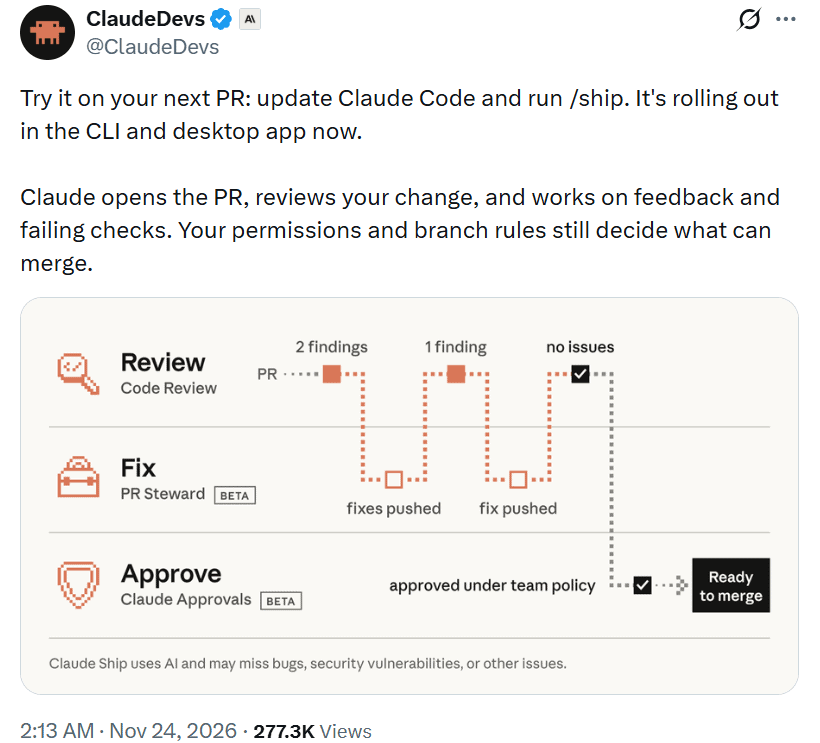
Now available for GitHub repositories on Claude Team and Enterprise, with admin-controlled repo-wide automation. Source: @ClaudeDevs/X
In an October engineering blog post, Anthropic said merged pull requests for the Claude Code codebase more than doubled between June and September 2026. The company also reported that the share of merged changes that required reverts fell by more than 40% during that period.
The figures reflect Claude’s role in a wider internal review process rather than the performance of Claude Ship as an independently tested product. Anthropic also previously reported an increase in the share of internal pull requests receiving substantive review comments, from 16% to 54%, following the introduction of its Code Review system.
These results indicate how automated analysis can increase review coverage while reducing some of the work required from engineering teams. However, the figures are based on Anthropic’s own development environment and should not be interpreted as independently verified performance benchmarks for other organizations.
Human Oversight Remains Part of the Workflow
Anthropic’s engineering team has described a layered approach to reviewing AI-generated code. The internal process includes testing changes before a pull request opens, automated code and security reviews, CI checks, risk-based human approvals, merge queues, and mechanisms for detecting and reversing faulty releases.
The company distinguishes between routine updates and changes that could create wider technical or security problems. Documentation changes and low-risk updates may require fewer human approvals, while sensitive areas such as billing systems, software update mechanisms and CI workflows receive additional scrutiny. Anthropic also uses monitoring and rollback procedures because automated reviews cannot eliminate every potential error.
Customer feedback highlighted the intended division of responsibilities. Vatsal Bhatt, Director of Engineering at TELUS Digital, said: “We keep a human in the loop, and the human’s time now goes to the changes that need it.”
The approach reflects Anthropic’s position that AI should take on repetitive review and correction tasks while developers retain responsibility for decisions that require deeper technical judgment. The company also acknowledges that Claude Ship may miss bugs, security vulnerabilities, or other problems.
Availability and How Developers Can Use Claude Ship
Claude Ship is available in beta to customers on Claude Team and Enterprise plans using GitHub repositories. Code Review is generally available, while PR Steward and Claude Approvals remain in beta.
Individual developers can access the workflow through Claude Code by updating the application and running the /ship command on a prepared change. Claude then pushes the change, opens a pull request, reviews it, and works through feedback and failing checks. The command is rolling out through the Claude Code CLI and desktop application.
Engineering administrators can enable the system across individual repositories without requiring developers to invoke /ship manually. They can choose review levels, determine when automated reviews run, and establish monthly spending limits. Organizations can also introduce the components separately rather than activating the entire workflow immediately.
Claude Ship uses token-based billing, with costs depending on pull request volume, code size, review depth, and the amount of work performed by PR Steward. Anthropic also lists restrictions for organizations using Zero Data Retention, HIPAA configurations, or customer-managed encryption keys.
With Claude Ship, Anthropic is extending AI-assisted software development into the review and approval stages that traditionally depend on engineering teams. Its approach gives organizations more options for handling routine changes automatically while preserving human oversight for decisions that require additional scrutiny.
 Brave New Coin reaches 1M+ engaged crypto enthusiasts a month through our website, podcast, newsletters, and YouTube. Get your brand in front of key decision-makers and early adopters in 2026. Limited slots remaining! Find out more today!