Michael Burry Says ‘Get Out’ of Nvidia Stock as Jensen Huang’s Sudden Exit Sparks Chaos
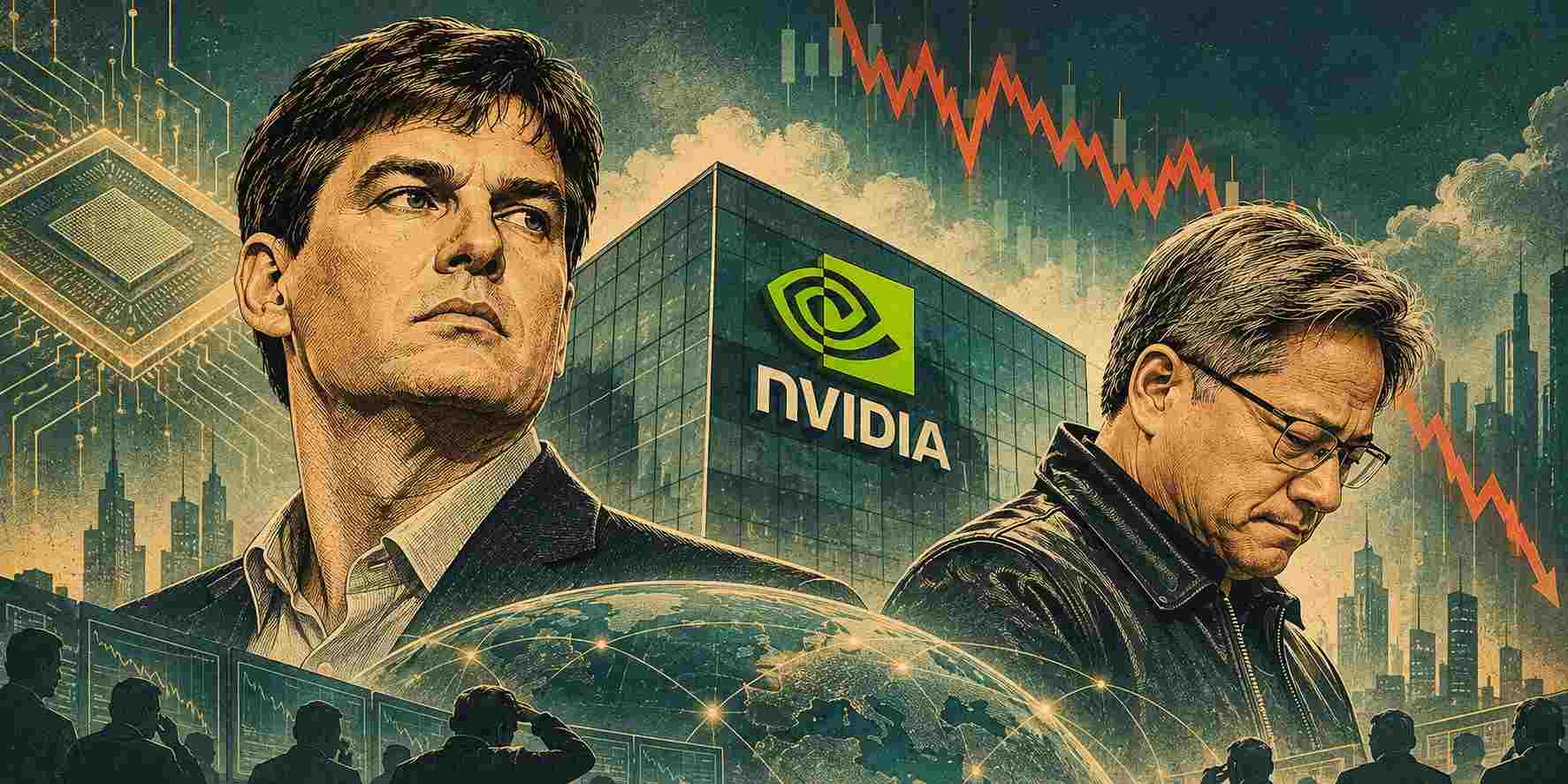
Michael Burry has urged Nvidia investors to sell their shares, arguing Jensen Huang’s sudden resignation could weaken the relationships underpinning the chipmaker’s AI expansion.
The warning came on November 12, shortly after Nvidia confirmed that its longtime CEO had stepped down with immediate effect. Burry believes Huang’s departure could expose weaknesses in the company’s customer relationships, financing arrangements, and growth strategy, potentially putting further pressure on NVDA shares.
Burry, the investor known for predicting the 2008 US housing market collapse depicted in The Big Short, outlined several reasons for his bearish outlook in a Substack post. He argued that Huang’s personal influence played an important role in maintaining Nvidia’s commercial ecosystem and that his absence could change how customers and business partners approach the company.
Michael Burry Warns Nvidia Investors About Customer Relationships and Financing Risks
Burry’s central argument focuses on the influence Huang exercised over Nvidia’s customers and business partners. According to the investor, the CEO played an important role in persuading major technology companies and AI infrastructure providers to commit to Nvidia’s hardware, including through arrangements that encouraged customers to purchase chips ahead of their immediate requirements.
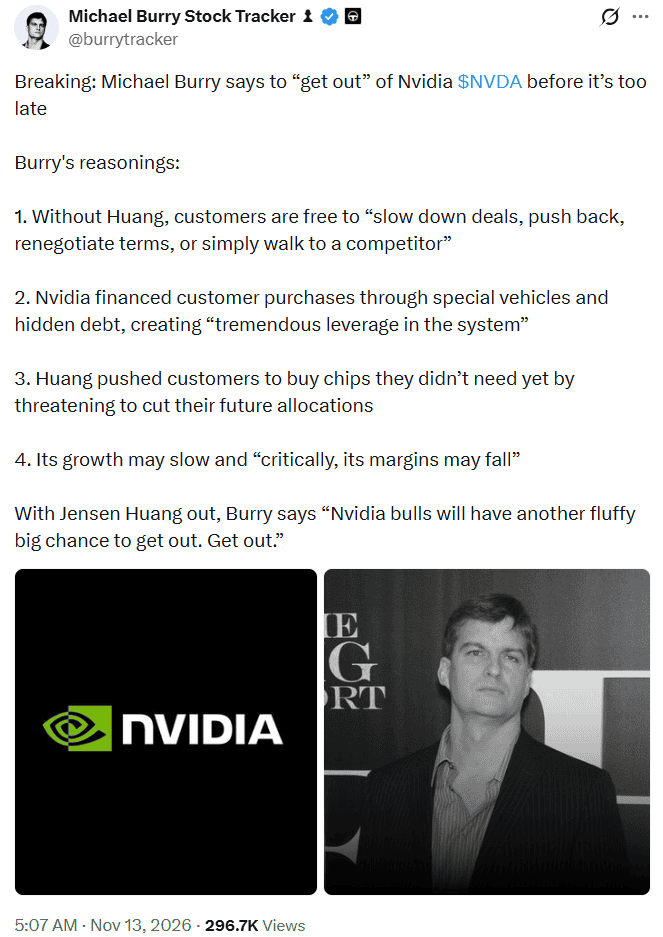
Michael Burry urged Nvidia investors to sell, warning that Jensen Huang’s exit could undermine the company’s leadership and growth. Source: @burrytracker/X
Without Huang directing those relationships, Burry believes customers could become more willing to reconsider existing commitments. He argued that companies may now have greater freedom to “slow down deals, push back, renegotiate terms” or switch to competing chip suppliers.
The investor also raised concerns about Nvidia’s financing arrangements. He claimed the company used special-purpose vehicles and other financial structures to help customers fund purchases of its AI chips. In his assessment, these arrangements created “tremendous leverage in the system” by connecting Nvidia’s chip sales, customer financing, and broader investments in the artificial intelligence industry.
Burry suggested that Huang’s departure could disrupt this interconnected structure. If customers reduce purchases or reconsider their financing commitments, some investments supporting the AI ecosystem could lose momentum. He also warned that existing arrangements might take considerable time to unwind, potentially affecting cash flows across the industry.
Another concern involves Nvidia’s chip allocation strategy. Burry alleged that Huang encouraged customers to purchase hardware before they immediately needed it, partly by warning that future allocations could be reduced if they delayed their orders. Without the founder overseeing these relationships, customers may feel less pressure to accept the same commercial terms.
However, these arguments represent Burry’s interpretation of Nvidia’s business model rather than established findings of financial misconduct. The implications of the financing arrangements and customer commitments will depend on how the company manages them under its new leadership.
Burry ultimately acknowledged that Nvidia’s underlying business would not disappear following Huang’s departure. Nevertheless, he believes its growth could slow, and its profit margins could come under pressure if customers gain more negotiating power. He concluded his warning with a direct message to investors: “Nvidia bulls will have another fluffy big chance to get out. Get out.”
Nvidia Stock Recovers After Sharp Sell-Off Following Huang’s Resignation
Nvidia shares experienced significant volatility after the company announced Huang’s departure. The sudden leadership change added another layer of uncertainty to an already difficult period for the AI chipmaker, with investors reassessing the potential consequences for its business strategy and future growth.
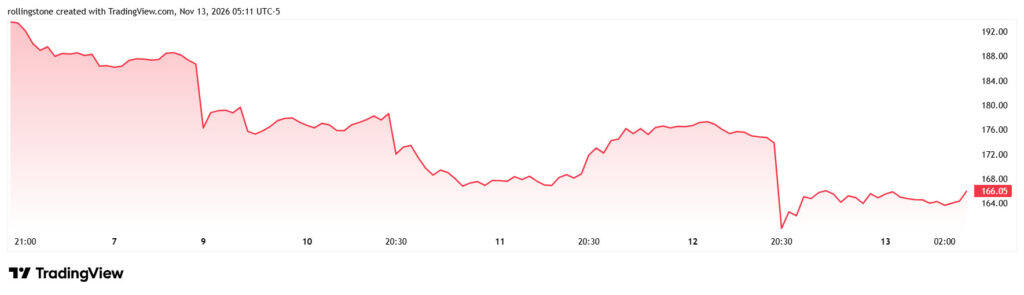
NVDA price chart. Source: TradingView
NVDA fell sharply during early trading on November 12, reaching an intraday low of $148.80. This represented a decline of approximately 14.3% from the previous closing price of $173.73. However, buyers emerged later in the session, allowing the stock to recover part of its losses.
Nvidia ultimately closed at $166.19 on November 12, down 4.34% for the session. The decline reduced the company’s market capitalization by approximately $180 billion, bringing its valuation to around $4.01 trillion. Trading activity also surged, with more than 740 million shares changing hands during the session.
As of the latest available overnight market update on November 13, NVDA was quoted at approximately $166.38, according to Yahoo Finance. The regular-session closing price remains $166.19, as the November 13 trading session had yet to begin at the time of the update.
The decline also extended a broader weakness in Nvidia shares. The stock had already retreated from its early-October high of approximately $243, reflecting pressure across AI-related equities and concerns about the scale and sustainability of artificial intelligence investment.
Market participants are now evaluating whether Nvidia can maintain its commercial influence without its founder. The transition could affect customer negotiations, strategic partnerships, supply agreements, and the financing arrangements that have helped accelerate AI infrastructure spending.
Colette Kress Takes Over as Nvidia’s Interim CEO
Nvidia confirmed Huang’s immediate resignation on November 12, ending his tenure as the company’s chief executive, president, and board member. The announcement followed several days of intense scrutiny surrounding reports of alleged extramarital relationships and concerns about a possible foreign intelligence operation.
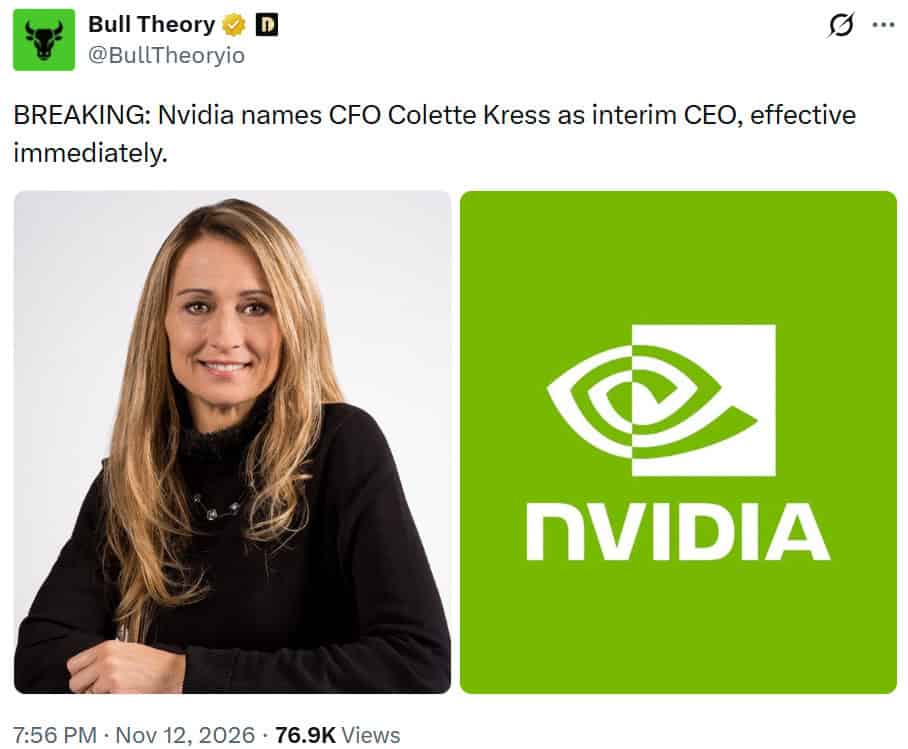
Nvidia appoints CFO Colette Kress as interim CEO, effective immediately. Source: @BullTheoryio/X
Huang had acknowledged being unfaithful to his wife in a message to employees earlier in November. Separately, Nvidia’s board announced an independent investigation into reports that he may have been targeted by a foreign intelligence effort. The company stated that it had no reason to believe its trade secrets or national security interests had been compromised.
Importantly, the allegations surrounding the suspected Chinese intelligence connection remain unresolved. On November 12, US Attorney General Todd Blanche said the Justice Department had not reached a conclusion about whether Alice Huang, the businesswoman linked to the allegations, was working for the Chinese government. Beijing has also denied the espionage claims.
Following the CEO transition, Nvidia appointed longtime Chief Financial Officer Colette Kress as interim chief executive. Kress joined the company in September 2013 and will retain her CFO responsibilities while overseeing the business during the leadership search.
The board also appointed Harvey C. Jones as its first-ever chair. Jones has served on Nvidia’s board since 1993 and brings decades of experience in technology management and venture investing.
Nvidia said it would consider both internal and external candidates for the permanent CEO position. Jones also expressed confidence in Kress and the existing leadership team, stating that the company’s operations, customer commitments, and product roadmap were expected to continue without interruption.
The transition nevertheless creates a difficult challenge. Huang led Nvidia for more than three decades and became closely associated with its expansion from a graphics processor manufacturer into a central supplier of AI computing infrastructure. Replacing his leadership will involve more than appointing another executive. The next CEO will also need to maintain relationships with customers, developers, suppliers, and investors across the global technology industry.
More Than 1,600 Nvidia Employees Call for Jensen Huang’s Return
Despite the controversy surrounding Huang’s departure, the former CEO continues to receive support from parts of Nvidia’s workforce.
A report published by WIRED on November 12 revealed that an internal suggestion-box post urging the board to consider employee sentiment had attracted more than 1,600 comments. Most of the responses reportedly supported bringing Huang back to the company.
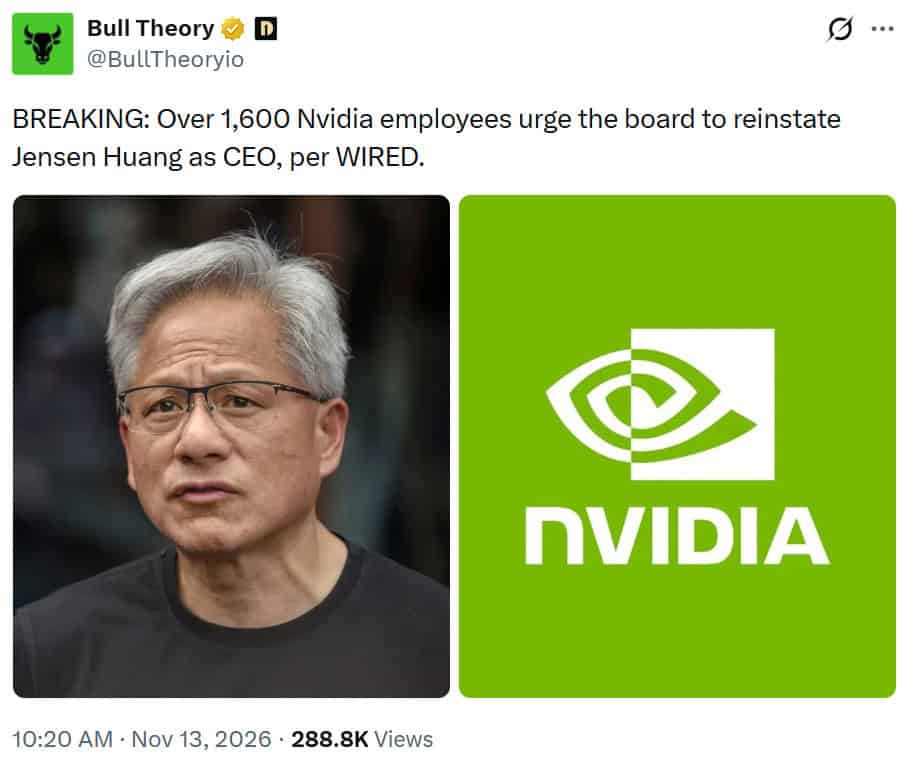
More than 1,600 Nvidia employees urged the board to reinstate Jensen Huang as CEO following his resignation. Source: @BullTheoryio/X
One employee wrote, “If you believe in the mission, bring back THE boss,” reflecting the loyalty Huang developed during his decades at the chipmaker.
Another commenter argued that Huang deserved a second chance, writing, “We are all humans and can make mistakes.” The responses indicate that some employees believe his contributions to Nvidia should be considered separately from the personal allegations surrounding his departure.
The internal discussion reportedly began before the resignation was announced. A longtime Nvidia engineer had submitted the original suggestion-box post, asking the board to consider employees’ views before making a decision about Huang’s future.
One employee also sent a companywide email requesting greater transparency about the circumstances surrounding the leadership change. The message expressed continued support for Huang while calling attention to his contribution to the company’s development.
However, the internal comments do not necessarily represent the views of Nvidia’s entire workforce. They do highlight the challenge facing the board as it attempts to manage a leadership transition involving a founder whose influence extends well beyond his formal position.
For investors, the employee response adds another dimension to the uncertainty. Retaining experienced engineers, executives, and other employees will be important as Nvidia works to preserve its technological advantage and maintain its relationships with customers.
Nvidia’s Upcoming Earnings Report Becomes a Key Test for NVDA Investors
Nvidia’s leadership crisis comes just days before its next financial results. The company is scheduled to announce its fiscal third-quarter 2027 results on November 17, with Colette Kress expected to provide the financial commentary in her capacity as CFO.
The report will give investors an opportunity to evaluate Nvidia’s operating performance amid the recent turmoil. Revenue growth, profit margins, customer demand, and management’s outlook for AI infrastructure spending are likely to remain central areas of interest.
Burry’s warning places particular emphasis on the relationship between Nvidia’s growth and the commercial arrangements supporting demand for its chips. Investors will therefore be watching for any indications that customers are changing their purchasing plans or that financing commitments could affect future orders.
Nevertheless, Huang’s resignation does not automatically mean that Nvidia’s technological position or existing customer relationships will deteriorate. The company retains its established product portfolio, engineering workforce, and extensive ecosystem of developers and industry partners.
The immediate challenge is to demonstrate that these advantages can remain intact under different leadership. Kress and the board will need to reassure investors that the company’s commercial strategy can continue without the executive who directed its expansion for 33 years.
For now, Burry’s sell warning reflects concerns about Nvidia’s leadership dependence, customer financing, and future profitability. Whether those risks translate into weaker financial performance remains to be seen. The November 17 earnings announcement and the board’s search for a permanent CEO will provide investors with important developments to assess as NVDA navigates this transition.
 Brave New Coin reaches 1M+ engaged crypto enthusiasts a month through our website, podcast, newsletters, and YouTube. Get your brand in front of key decision-makers and early adopters in 2026. Limited slots remaining! Find out more today!