


Hyperledger used to track US oil on a blockchain
IBM, commodities trading house Trafigura, and the French investment bank Natixis are pioneering a blockchain solution for US crude oil transactions. Using a distributed ledger to host this market “allows major steps in a crude oil transaction to be digitized on the blockchain, ensuring improved transparency, enhanced security, and optimized efficiency,” according to IBM.

Alibaba to explore blockchain in fight against counterfeit food
Australia Post recently joined an initiative to combat the rise of counterfeit food being sold across China. The company joins Chinese e-commerce juggernaut Alibaba and nutritional supplement maker Blackmores. The project aims to track food from, “paddock to plate.”

Cryptocurrency, blockchain, and online gaming
Alongside the Statue of Liberty the iconic yellow cabs of New York City are recognized worldwide as an emblem of the great metropolis. Today these hallmark fixtures of the city are facing an existential crisis and for the city’s residents and visitors alike, it’s a big win.

Russians launder billions through British banks
I recently discovered that there is around $1.6 trillion of money laundering globally and less than 2% is caught by the financial system. That’s a stunning amount and makes you wonder why our system is so awful. Much of it is down to the fact that account openings depend upon physical documentation and human checks. If we could digitalise the whole process, it could be tightened up immensely.

Sphre securing online services with blockchain technology
According to customer identification manager LoginRadius, four out of five people dislike the tedious process of providing personal information for website registration. The Baynard Institute, a web research company based in the UK, reports that 35 percent of online shoppers abandon their shopping carts due account creation requirements, while ITProPortal estimates that we will have over 200 digital accounts to manage by 2020.

Mybit tackles data manipulation, an ‘emerging art of war in cyberspace.’
Since the rise of the internet, big data is becoming the bedrock of the economy. Billions of decisions are being made everyday based on data. Not only is it evident that appropriate security measures are not in place, those that do attempt to secure their data pose little deterrence to cyber attackers.
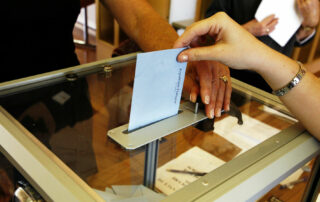
Blockchain Technology: A potential solution to systemic voter suppression
On February 10th the World Jurist Association hosted a side event at the United Nations, entitled *Blockchain: Highway to a Deliberative Democracy*. Experts in financial, legal, technical, and philosophical industries came together and presented the different ways that blockchain technology can be leveraged in order to improve Democratic Governance. The audience comprised government officials, academics, and technological leaders. Joseph Lubin, the founder of ConsenSys and a major player in the blockchain space, presented the concept of a decentralized web 3.0 as enabled by blockchain technology, and the ways in which this development is uniquely positioned to aid people in both the developing and developed world through the creation of self sovereign identities.

Considering a Pragmatic Approach to Blockchain Implementation
The current implementations of distributed ledger technology clearly are not the Blockchain that underpins the virtual currency Bitcoin. The tools and platforms such as the offerings from Digital Asset Holdings and R3 Corda are offered as a pragmatic answer to a set of current business, technological and regulatory challenges. By implementing the appropriate use cases, firms can avoid the current challenges exhibited by the Bitcoin example – including scalability, latency and privacy – that make the current public Blockchain model a non-starter for banks.

BIS endorse Distributed Ledger Technology for payments clearing and settlement
I’ve just been alerted by friend Gijs Boudewijn to the release of a fascinating white paper by BIS, the Bank for International Settlements (the guys who do Basel stuff and are big cohonez in banking circles). Their Committee on Payments and Market Infrastructures released Distributed ledger technology in payment, clearing and settlement: an analytical framework last week, and I just read it.

Crypto Valley Association building a concentrated blockchain ecosystem in Switzerland
Several businesses in “Crypto Valley,” centered in and around the Swiss canton of Zug, recently launched the Crypto Valley Association. The independent, government-supported association aims to take advantage of Switzerland’s strengths to build the world’s leading blockchain and cryptographic ecosystem, while working with government to foster the development of pioneering digital technologies. Alongside many blockchain startups in Zug, association launch members include Thomson Reuters, PWC, UBS, Luxoft, Lykke Corp and Lucerne University.

The Blockchain NZ 2017 confirms Antonopoulos & Buterin as keynotes, focuses on collaboration
3months.com, BraveNewCoin, and the Blockchain Association of New Zealand (BANZ) are putting together another blockchain conference, BlockchainLabs.NZ. The conference is focused on empowering organisations to collaborate, undertaking research and development, and commercialising new disruptive blockchain business models.

Counterparty payments in seconds is an easy sell
It made me laugh today. I was chairing a panel where Romana Kumar, Head of Global Transaction Banking for the National Bank of Abu Dhabi (NBAD), was discussing their trial of Ripple. The background to this was announced in a press release on 1st February 2017.

Guernsey to host ‘the first ever’ private equity blockchain deployment
The Government of Guernsey recently announced that their island has become the home of "the first ever commercial deployment of blockchain technology for the private equity market."

Blockchain technology can solve several media industry problems
The unsurpassed reach of the Internet and the emergence of a range of new digital technologies have transformed virtually every corner of the music industry for fans and creators alike. While consumers enjoy vastly more options, these market disruptions are presenting a range of important challenges for creators, producers, and distributors of music.

European Commission ‘actively monitoring’ Blockchain developments
The Vice-President of the European Commission, Andrus Ansip, recently provided details on initiatives, projects and partnerships to foster decentralised innovation ecosystems in Europe. “The Commission is actively monitoring Blockchain and DLT developments,” he said.

The devil is in the detail: SEC regulation of blockchain technology
Blockchain technology has captured the imagination of the financial services industry. Unfortunately, the adoption of the technology is impaired by a lack of clarity from regulators, including the U.S. Securities and Exchange Commission (“SEC”), on how the technology will be regulated. Many firms in the financial services industry believe blockchain technology can be adapted for use in traditional financial services transactions in a way that can reshape the model of executing trades. But the success of blockchain technology will be impacted in large part by how the SEC elects to regulate platforms that use the technology. The devil will be in the details.


